Fish fingers, a Ferrari and a rocket engine: five founders at the SpaceTech Startup Roadshow

Five founders. Five very different approaches to solving some of the challenges emerging across the space sector. And a room full of people keen to discover what comes next.
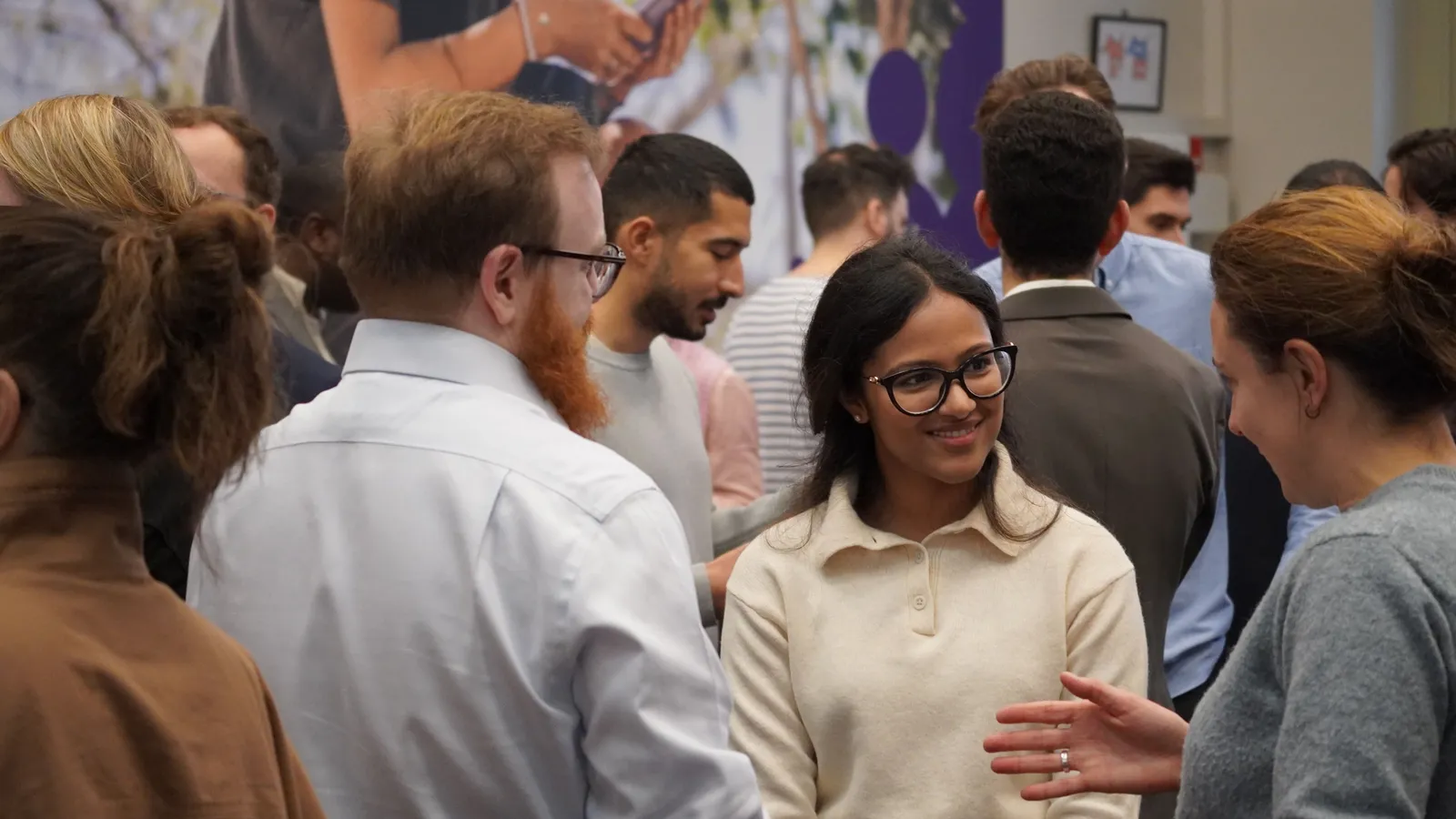
On Thursday 12 November, we joined forces with South East Angels to bring the SpaceTech Startup Roadshow to the NatWest Accelerator near Moorgate. Each founder had just a few minutes to make their case to four judges and an audience of investors. By half past twelve, one would take home the prize. Here’s how the morning unfolded.
Setting the scene
Kate Beresford-Green, Chief Strategy Officer at Raise inc, opened with a question that sits at the heart of the opportunity: what comes next in space, and how can investors help shape it?
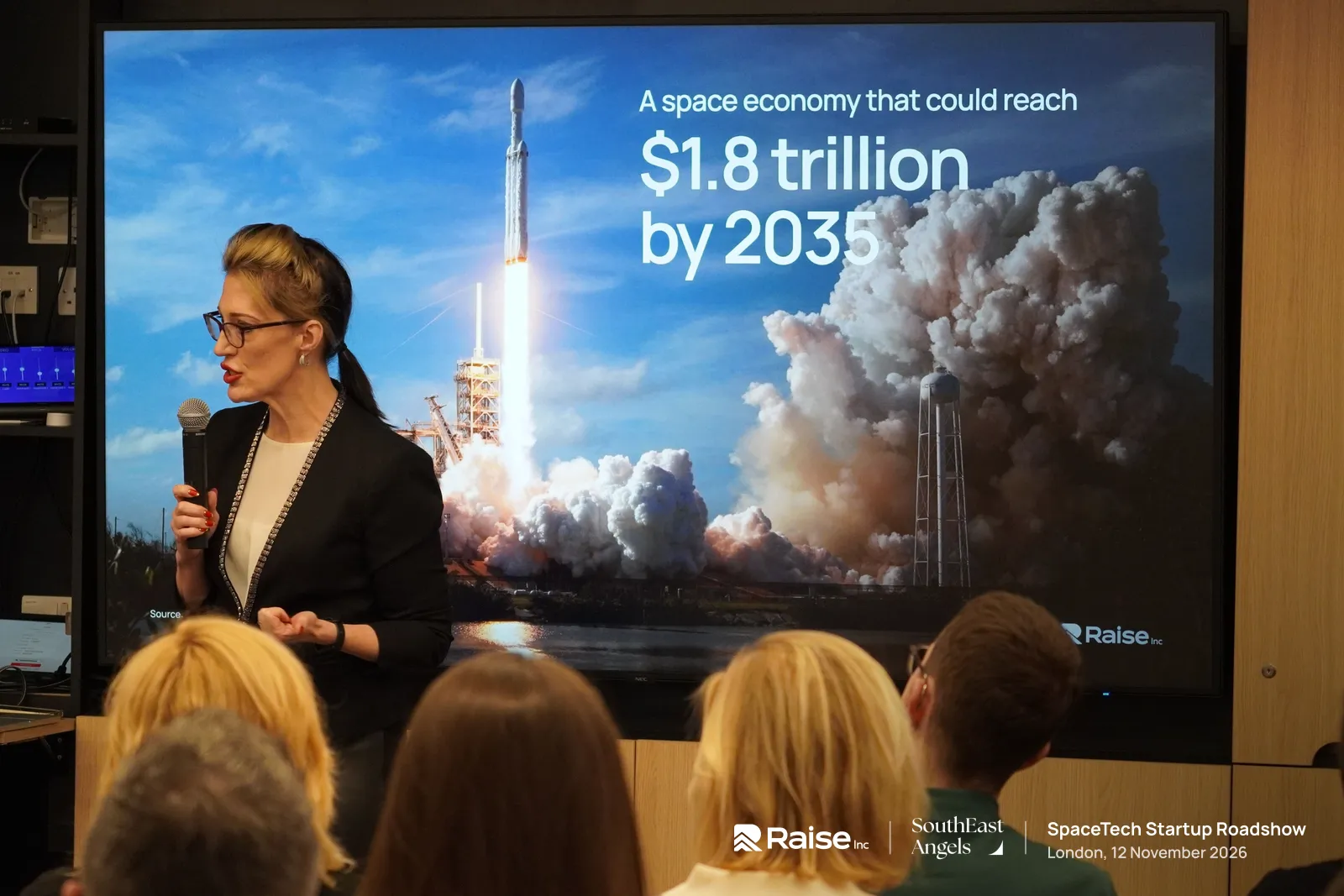
Space is already woven into our everyday lives, from the phones in our pockets to the maps we rely on. The World Economic Forum and McKinsey estimate that the global space economy will reach $1.8 trillion by 2035, while the falling cost of launch is opening the door to a far wider range of businesses. Kate drew a distinction between downstream companies using space-derived data to improve life on Earth, whether in agriculture, navigation or disaster relief, and upstream companies developing the spacecraft, propulsion and systems that make it all possible. The latter often need longer development timelines and, crucially, patient capital.
To bring that point to life, she asked the room to imagine the railways stretching across America. Laying the tracks demanded enormous investment and years of work. But once they were there, producers could reach customers from coast to coast and entire towns grew along the routes. “That’s how I like to think of space right now,” she said.
“We are laying the tracks.”
She left the audience with three questions to consider as each founder pitched: is this company building infrastructure, making operations in space more efficient, or solving a problem here on Earth? With that, it was over to the founders.
David Robertson, Thistle Rocketry
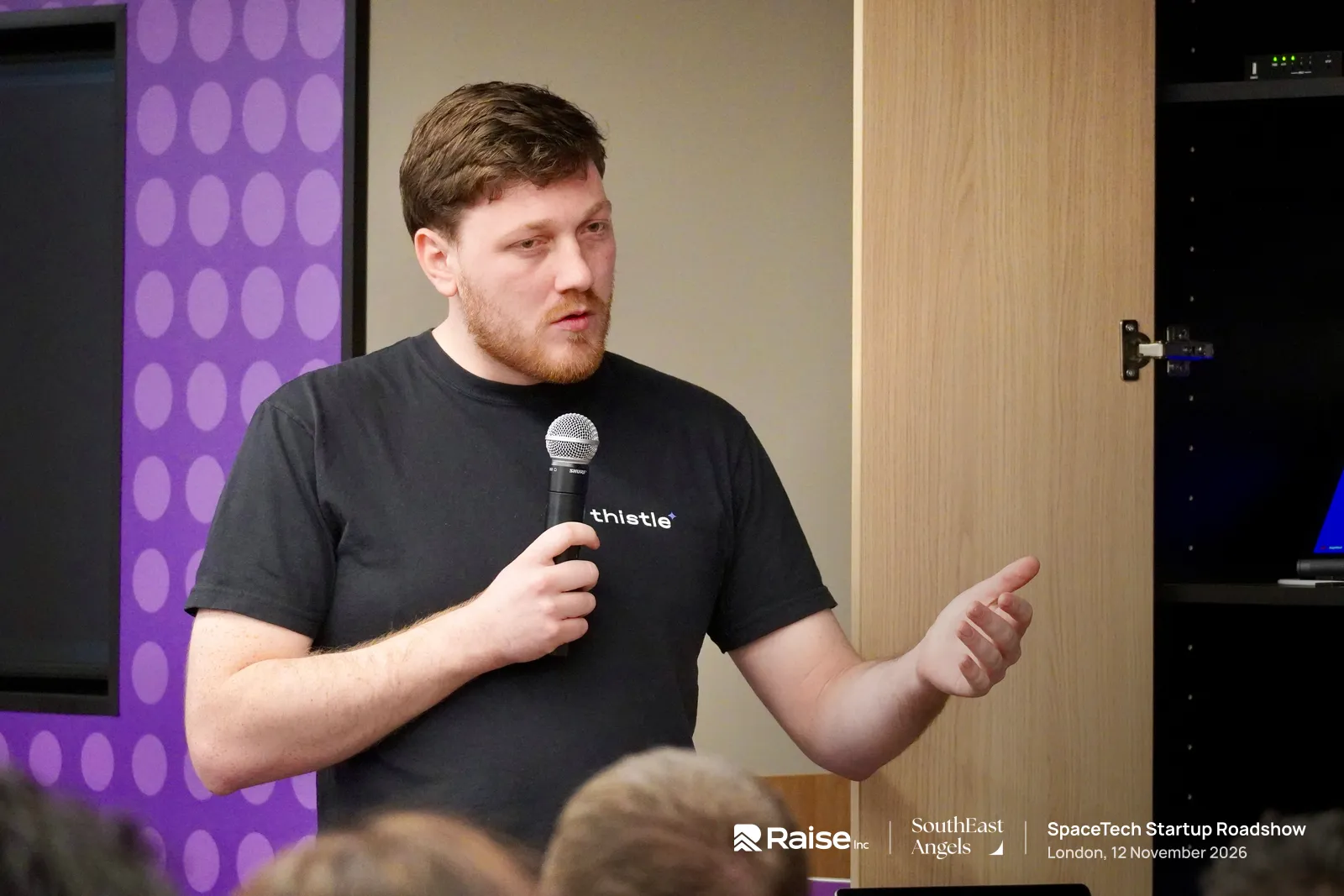
David’s route into rocketry began in AI and software, with the rocket science largely self-taught along the way. Thistle initially set out to build small rockets, before recognising just how much capital that would require for an early-stage UK business. Instead, the team turned its attention to a technology it had developed in the process: a patented Fluid Driven Pump. It is a scalable propellant pump designed to fit existing chemical propulsion systems, offering satellite manufacturers an upgrade without the significant power demands of electric pumps.
What stood out was how closely the team had listened to its prospective customers. When those customers said they would buy once the technology was further proven, Thistle built its development plan around that feedback. Its first project, fully funded by the European Space Agency, is due to finish in the coming months, with a second intended to reach the level of validation customers have asked for. Prototypes already span everything from a satellite-sized engine to an 8-kilonewton rocket engine. One judge immediately picked up on the customer-led approach. A compelling first pitch, and a high bar for the morning.
Sweta Parmar, Agnia Aerospace
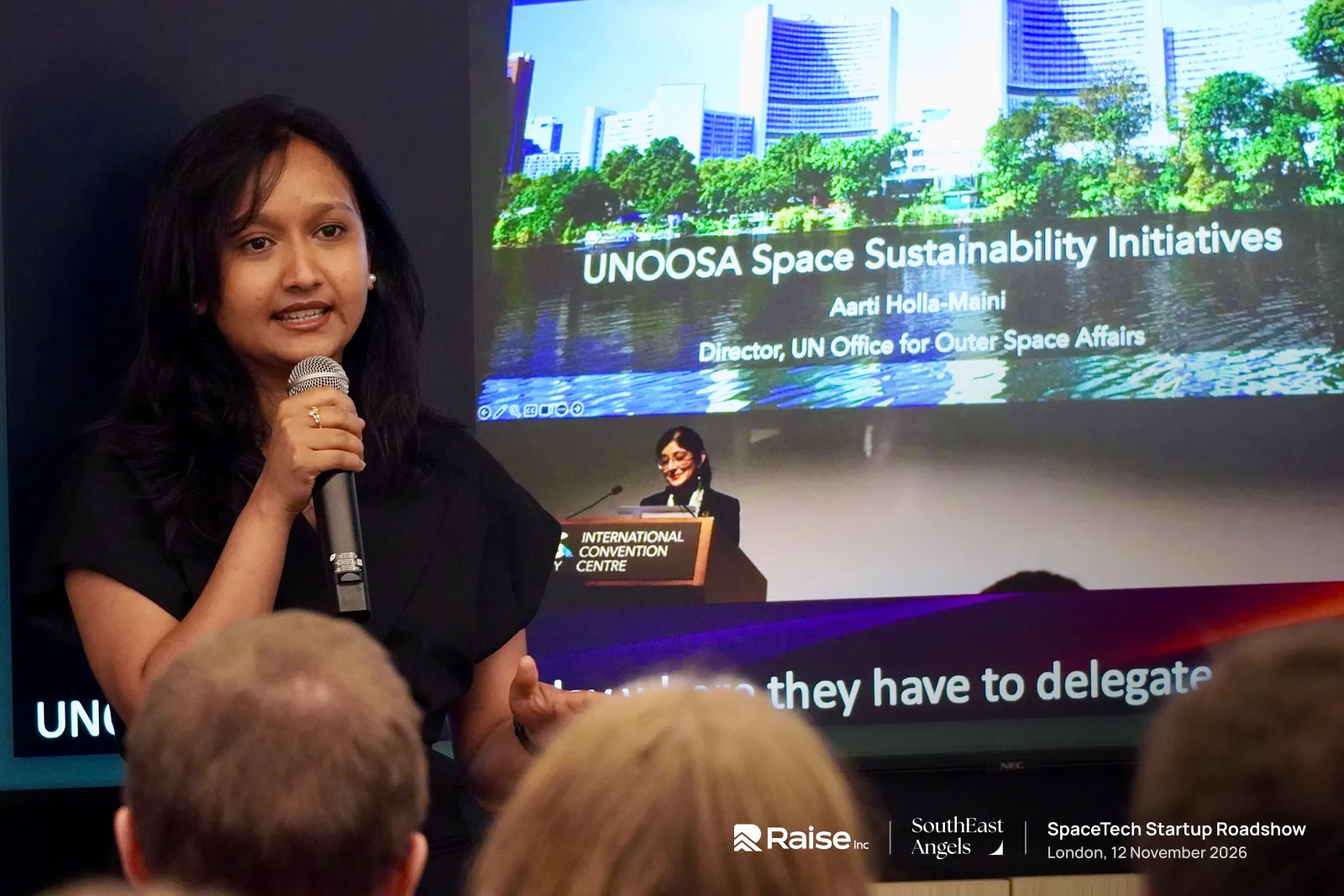
Sweta began with something she had heard last year from Aarti Holla-Maini, Director of the United Nations Office for Outer Space Affairs: her office receives daily calls from countries concerned about satellites getting in one another’s way. With tens of thousands more small satellites expected by 2030, the ability to manoeuvre quickly is becoming increasingly important.
Enter the Ferrari. Sweta asked us to picture two cars: a Ferrari with impressive speed but an appetite for fuel, and a Honda Civic that is wonderfully efficient but hardly built for sudden bursts of acceleration. Small-satellite propulsion faces a similar trade-off. Agnia is developing an engine designed to deliver both: high power when a satellite needs to move out of danger, and efficiency for the rest of its journey. In simulation, the system reduced the time required for a small satellite to manoeuvre by 55%.
When one judge, clearly intrigued by the engineering, pressed for the details of how it worked, Sweta smiled and explained that this was precisely the part she had patented. Even the company’s name carries a personal meaning: it comes from the word for fire, which she described as the fire in her heart.
Stuart Allan, Astro Dynamic
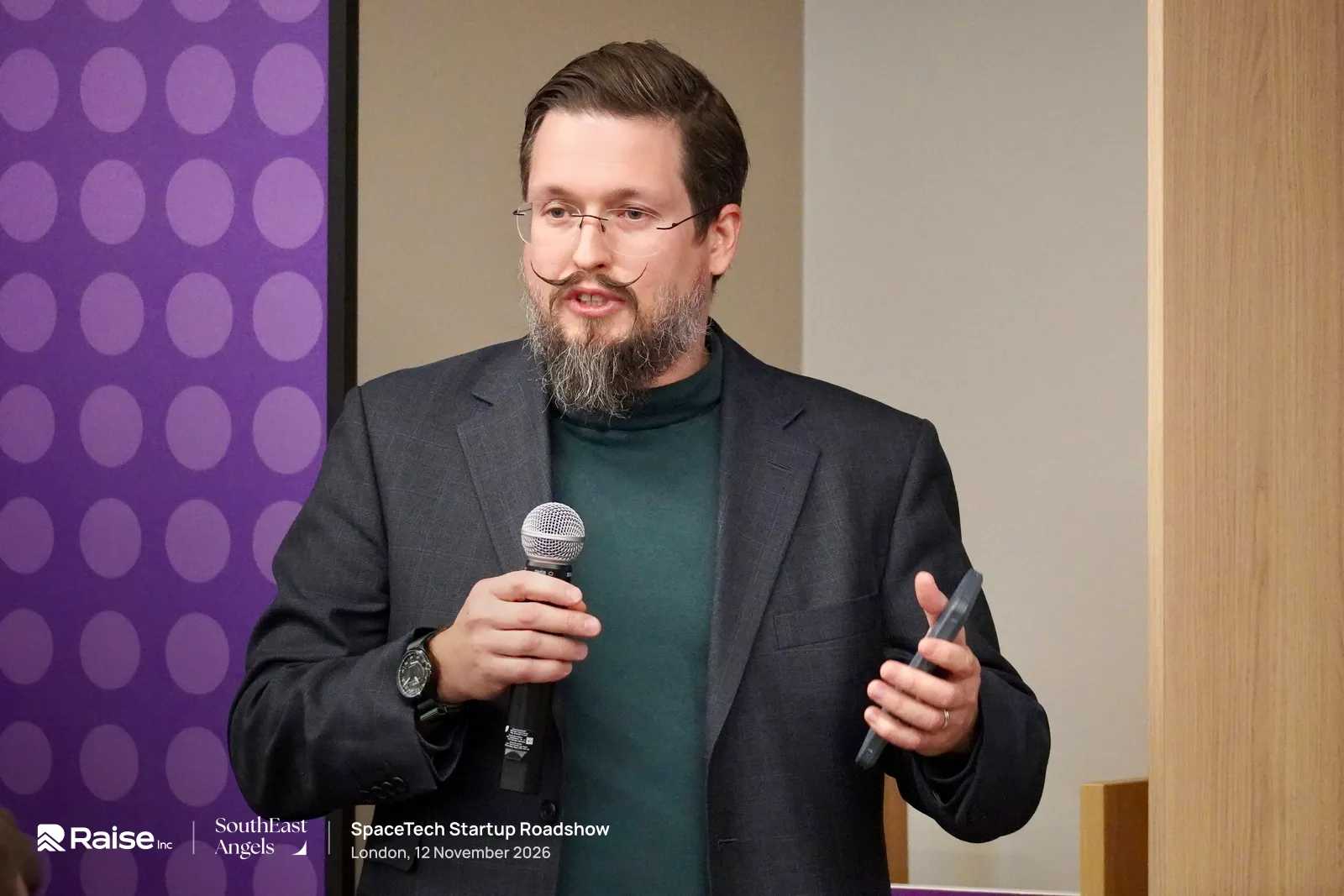
With more than 20 years in the industry, Stuart brought a practical perspective to Earth observation. The data is about far more than beautiful images from orbit. It informs decisions in infrastructure, energy and agriculture, yet accessing it remains surprisingly complicated. Different formats, restrictive licences, unreliable sources and frequent supplier changes all make it harder for customers to get what they need with confidence.
Astro Dynamic’s solution, Datasphere, brings data from multiple providers into one place under a single licence, automatically switching sources if one becomes unavailable. Version 1 went live during the week of the roadshow, with two customers already on board. Asked why Astro Dynamic should occupy that central position, Stuart made an important distinction: they are not trying to be the shiny side of space, but the part that makes everything behind it work. Sometimes it is precisely that enabling infrastructure that creates the opportunity.
Abigail Hoover, Orbiventure
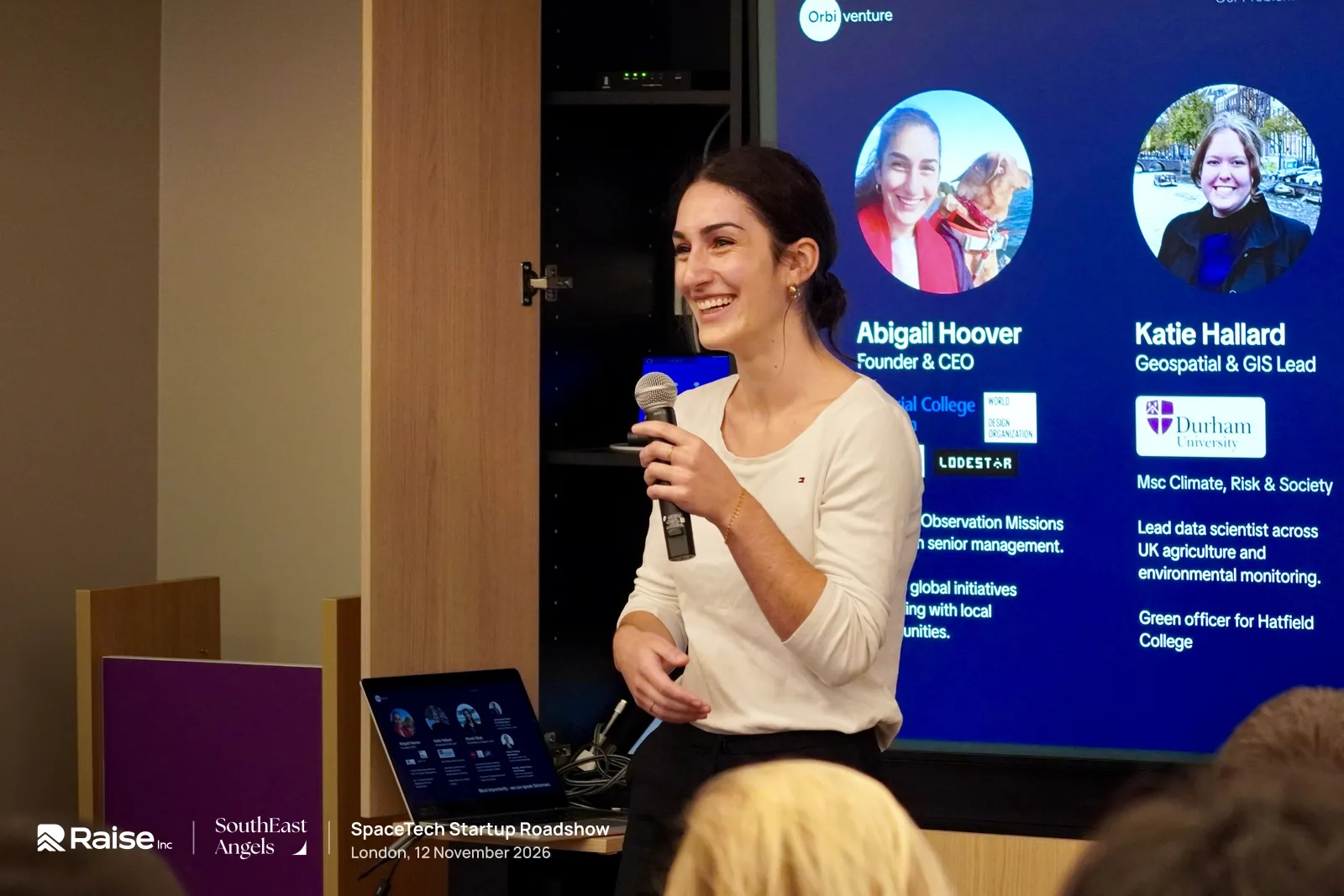
Abigail took us somewhere rather more familiar: the supermarket. We can pick up salmon or fish fingers for the children without giving much thought to where the fish came from. The supply chain can trace a fish from boat to plate, yet knows remarkably little about it while it is still in the sea. And the sea itself is changing. In 2025, UK haddock prices rose 22% after stocks fell without warning.
Orbiventure is tackling that information gap with SeaVoice, combining satellite-derived ocean data with fishermen’s own catch records. The aim is to help fleets understand where conditions are changing and whether a long trip is worth the fuel. The team has already spent time with more than 50 fishermen, and three UK fleets are interested in trialling the product in early 2027. Abigail brought us neatly back to Friday-night fish fingers to close, prompting one judge to declare a personal interest: their partner loves fish and chips.
Matt Allcock, NEOWATT
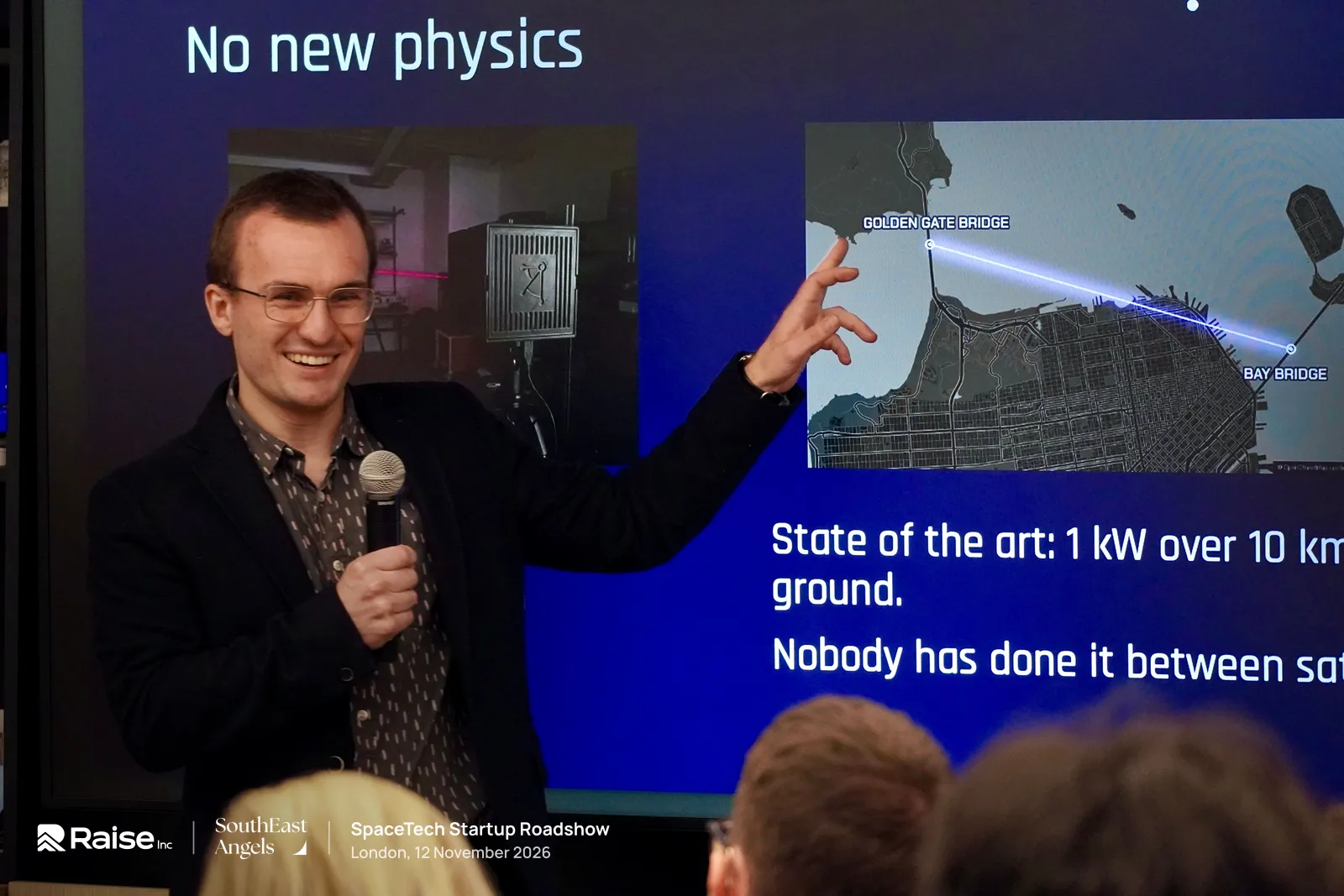
Matt closed the founder pitches by asking us to consider something that has barely changed in space. Before the Industrial Revolution, factories generated their own power through water wheels or steam engines. Satellites still operate in much the same way: each carries its own power generation, determined years before launch, and spends a significant portion of every orbit in darkness.
NEOWATT wants to change that by creating a power grid in space, using lasers to transmit energy from one satellite to another wherever it is needed. As Matt pointed out, the concept requires no new physics. Power has already been beamed over 10 kilometres on Earth, and he and co-founder Jamie, friends since school, have built a working system in their Glasgow laboratory. A ground demonstration at SaxaVord Spaceport is agreed for next year, a partner is lined up for the first in-orbit demonstration, and customers have signed letters of intent.
When asked whether the technology could eventually scale to the far greater power demands of future applications, Matt brought the conversation back to what customers actually need today. The judge appreciated the clarity, calling it really good pushback.
What the judges were listening for
Our judges were Kathryn O’Donnell, Anuj Ashar, Neil Rae and Lucy Edge. Collectively, their experience spans building a space company and selling it to BAE Systems, investing through a dedicated space fund, leading space work at KPMG, and almost 30 years in the UK space sector, including helping establish UKRI Space. Each had only one question per pitch, but some consistent themes emerged. For any founder preparing to pitch, they are worth keeping front of mind:
- Who is the customer, and what will they pay for?
- Why will you win against others in your field?
- What will the next 12 months prove?
- How will you protect what you have built?
- Why are you the person to lead this?

Lessons from further down the road
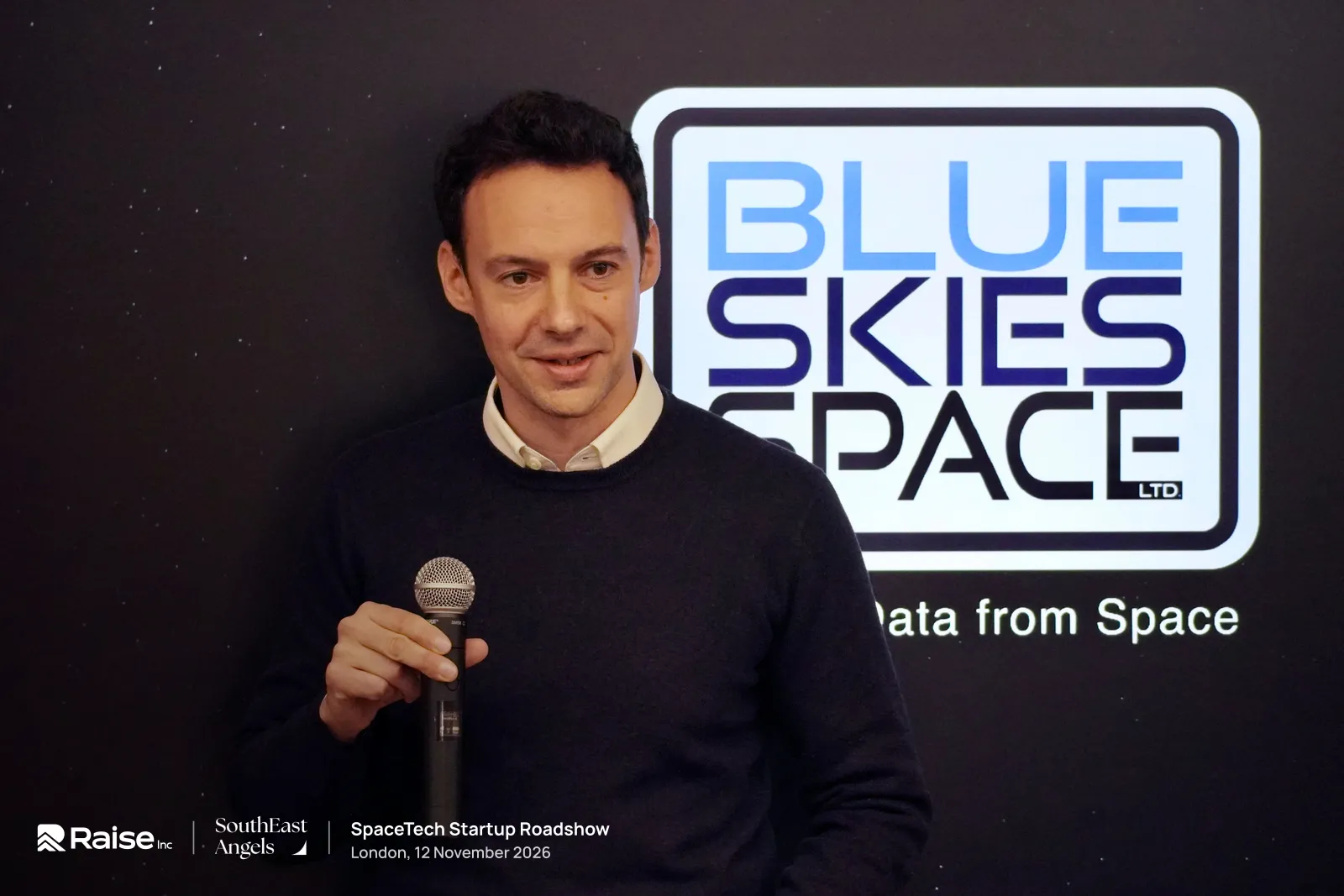
While the judges deliberated, Dr Marcell Tessenyi, Chief Executive of Blue Skies Space, offered a valuable perspective on what happens beyond those first funding rounds. Blue Skies Space sells data about stars, planets and galaxies to universities. Founded in 2014, it launched its first satellite, roughly the size of a microwave oven, last November and now supports researchers across 14 countries.
Marcell was wonderfully candid. People used to ask whether Blue Skies Space was a PowerPoint company. For eleven years, he admitted, it was. Three lessons stayed with us. First, take the smaller step: advisers encouraged the team to launch a small satellite first, an idea they initially resisted, but that smaller satellite ultimately got them to market. Second, delivery builds credibility: even when universities paid in advance, investors still questioned whether those commitments were little more than letters of intent. And third, never underestimate angels. They sustained the company while larger rounds took time, introduced other investors and offered something less tangible but equally important: someone to talk to on the difficult days. South East Angels was among those early backers.
The winner
When the judges returned, they made clear just how difficult the decision had been. Every founder had delivered a strong pitch, particularly impressive given the stages of their businesses. Ultimately, they chose the company that had demonstrated genuine customer demand, with signed contracts, committed buyers and a clear path to scaling.
After a drumroll from the room, the winner was announced: Thistle Rocketry.
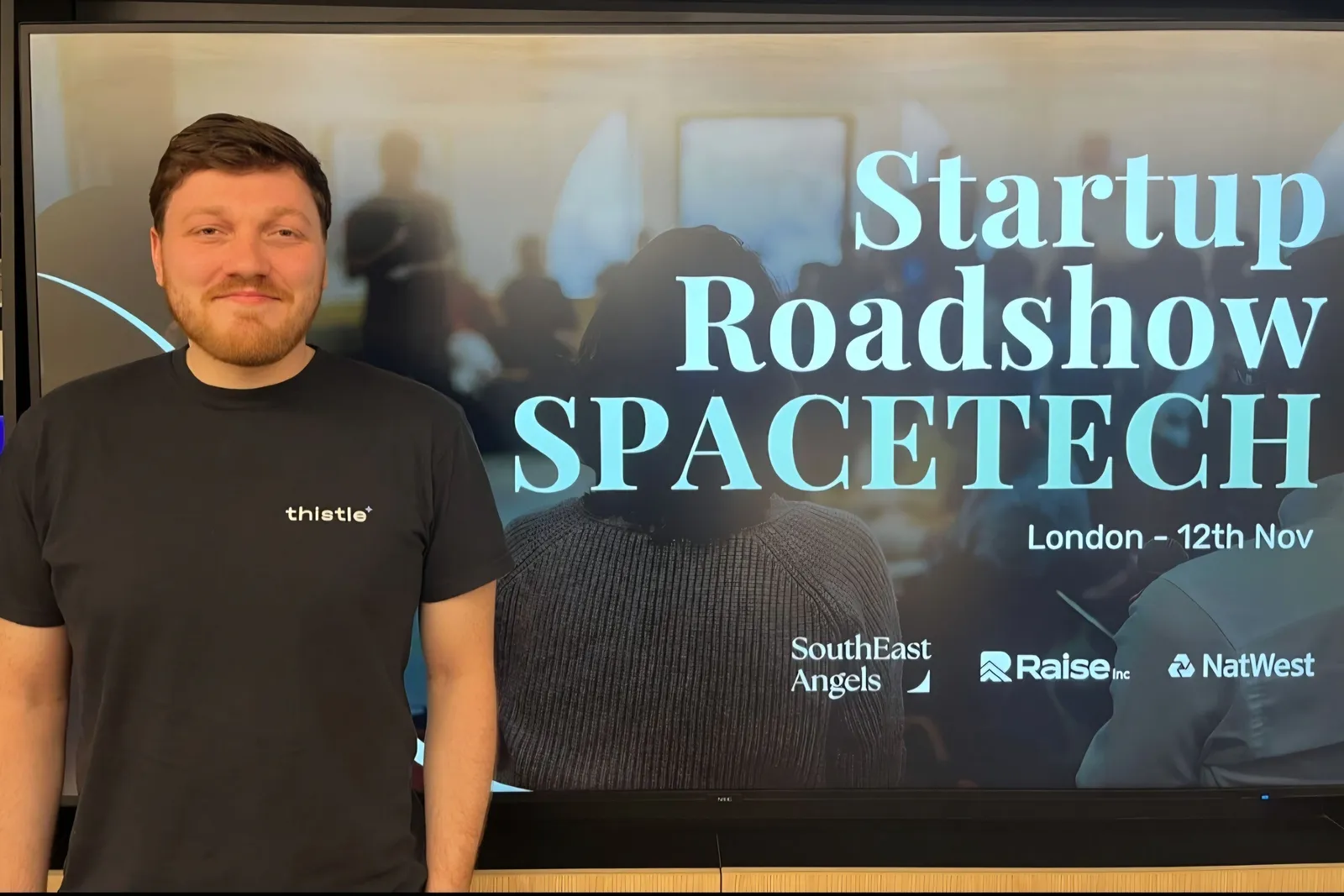
A fitting result for the first pitch of the morning, and a reminder of the power of listening carefully to customers and then building the evidence they need. Huge congratulations to David, Cameron, Daniel and the whole Thistle team.
Thank you
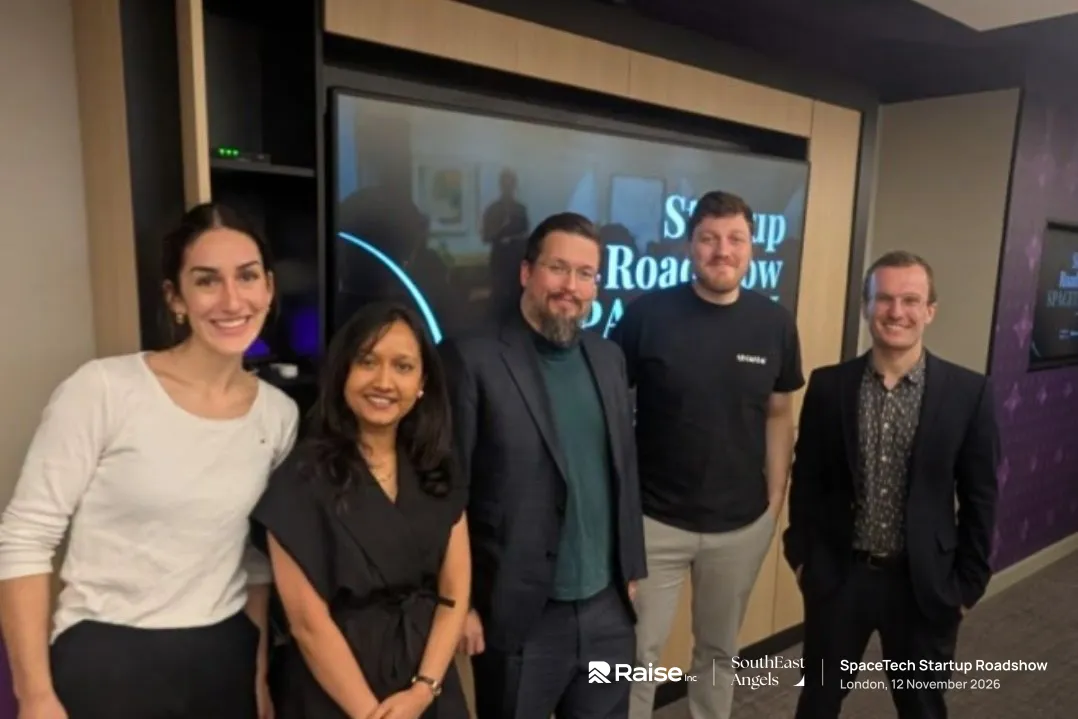
A heartfelt thank you to David, Sweta, Stuart, Abigail and Matt for sharing what you are building, and to Kathryn, Anuj, Neil and Lucy for the thought and care they brought to judging. Thank you also to Marcell for such an open account of the journey, to South East Angels for co-hosting, and to the NatWest Accelerator for making the morning possible. And of course, to everyone who joined us, asked thoughtful questions and stayed to continue the conversations. These connections are exactly why gatherings like this matter.
Our co-host and sponsor


“An award-winning community for angel investors. We operate one of the most active angel syndicates in the UK, currently investing £2M+ yearly into early-stage tech startups.”
South East Angels, our co-host. southeastangels.co.uk

We build tools for space and deep tech founders, and the investors and partners who back them. At the Roadshow we gave a short talk on what’s going on across SpaceTech.
Co-host.

NatWest sponsored the Roadshow, through the NatWest Accelerator.
Sponsor. About the NatWest AcceleratorThe next one
We’ll be sharing the date of our next roadshow soon. If you’re a space founder interested in pitching, or an investor who would like to judge or join us in the audience, do get in touch. We’d love to have you involved.
Engines that move satellites out of harm’s way. Power sent to wherever it is needed in orbit. A clearer picture of the fish in our seas. Each of these five founders is building something that could still be working in 2100. That is the work we want to see funded.
Want to pitch or judge at the next one?
Tell us and you’ll hear first.